

Anti Drinking And Driving Posters
Introduction
Road traffic crashes are the eighth leading cause of death globally and a major public health challenge that needs to be addressed. Every year, ~ane.35 million people die as a event of route traffic crashes and every bit many as 50 million others suffer from non-fatal injuries that may lead to disability (Globe Health Arrangement, 2018). In many countries around the world, road traffic crashes are not only a major crusade of mortality, morbidity, and serious injuries but likewise impose financial burdens on families and society (Decker et al., 1988; Kenkel, 1993). In low-income countries, the chance of road traffic deaths is three times higher compared to high-income countries, with the greatest burden in the African region (World Health Arrangement, 2018). Road traffic crashes in Federal democratic republic of ethiopia have been rise forth with rapid motorization, a lack of regulation of motor vehicles, and population growth. In Federal democratic republic of ethiopia, the route crash fatality rate for 2016 was estimated at 26.7 per 100,000 population, compared to 18.ii globally and 26.6 for the African region (Earth Health Organization, 2018).
Driving under the influence of alcohol (drink driving) is i of the major hazard factors for road traffic crashes (Agent et al., 2002). The consumption of alcohol—even in relatively small-scale amounts—affects drivers' sentence, vision, coordination, and reflexes and increases the risk of having a crash (Carvajal and Lerma-Cabrera, 2015; Pan American Health Organization Earth Wellness Organisation, 2018). Even among professional drivers, there is a high prevalence of potable driving and poor self-reported route rubber outcomes, road traffic fines, and crashes, regardless of the regularity or frequency of alcohol consumption (Useche et al., 2017). In improver, driving under the influence of alcohol leads to other high-risk route apply behaviors, such equally speeding, that can harm other road users who may be post-obit traffic laws (Zhao et al., 2014; Earth Health Organization, 2018; Yadav et al., 2019). Finally, drivers with alcohol utilize disorders are more than likely to be disqualified from driving every bit a outcome of road rubber offenses, including crash interest and traffic violations that lead to demerit points and/or loss of a driver'south license (Martí-Belda et al., 2019).
While progress has been made in reducing booze-dumb driving crashes in many high-income countries, low-income countries face up particular challenges in reducing drink driving, including social and cultural norms of alcohol use, lack of reliable traffic rubber data, and lack of well-developed beverage driving policies (Stewart et al., 2012). In Addis Ababa, road traffic crashes, and injuries stand for a major public health claiming (Addis Ababa City Administration, 2017a). In 2013, Addis Ababa recorded 382 reported road fatalities, and from 2012 to 2014, the city recorded ~12.v% of all reported road fatalities in Ethiopia (Addis Ababa Urban center Administration, 2017a). Among developed deaths due to injury, route traffic crash was the about mutual cause with an increasing trend in Addis Ababa (Anteneh and Endris, 2020). Drink driving is an important factor contributing to the city'southward road condom crisis (Addis Ababa Metropolis Assistants, 2017a). From September 2013 to August 2014, assay of road traffic crash data in Addis Ababa suggest that over half of fatal road traffic crashes are due to "reckless driving beliefs" (53.viii%) and <1% are due to drinkable or drugged driving (0.half dozen%) (Kebede et al., 2019). Still, other studies have suggested that the prevalence of drink driving cases is as loftier as ix% and drink driving is significantly associated with road traffic crash injury and decease in Addis Ababa (Mekonen, 2016; Bekele and Sima, 2019; John'due south Hopkins Academy, 2019).
Mass media campaigns are an effective public health intervention for addressing social norms and irresolute health behaviors (Redman et al., 1990; Noar, 2006; Wakefield et al., 2010). For mass media campaigns to be effective, they must not only impart crucial health information, such as through the presentation of facts or figures, but besides persuade through the use of emotional appeals, such as through evocative stories and images (Elliott, 1993; Ulleberg et al., 2009). In the context of road safety, evidence-based campaigns have been found to increase noesis and change attitudes, leading to reductions in risky route behaviors (Redman et al., 1990; Tay, 2002). Campaigns to reduce alcohol-impaired driving that persuade individuals to not drink and drive and encourage them to prevent others from doing so; spreading messages about the physical dangers and legal consequences of drink driving besides tends to be constructive (Elderberry et al., 2004; Phillips et al., 2011; Young et al., 2018). Campaigns with concomitant activities for reducing alcohol-impaired driving, such every bit legislation and enforcement efforts against alcohol-impaired driving, are as well beneficial for reducing road traffic crashes (Elvik et al., 2004; Phillips et al., 2011; Bachani et al., 2017).
Many countries effectually the earth apply the tripartite model of legislation-enforcement-advertizement for constructive campaigns against beverage driving (Cheng et al., 2011). In high-income countries, campaigns, when coupled with legislation and enforcement of legislation, are an evidence-based public wellness tool that can reduce potable driving (Lastovicka et al., 1990; Redman et al., 1990; Murry et al., 1993; Mruk, 2007; Young et al., 2018). Notwithstanding, there is a dearth of literature on this topic from depression- and center-income countries. More studies from depression- and middle-income countries are needed, equally this is where the majority of road traffic crash deaths occur. Also, it is important to examine the impact of anti-drink-driving campaigns on drinking and driving in these countries because results from studies in high-income countries may not exist generalizable to low- and middle-income countries where traffic regulations and driving practices might exist dissimilar. To our cognition, no written report has assessed the impact of anti-drink-driving campaigns in terms of cognition, attitudes, and behaviors in low- and middle-income countries, such every bit Federal democratic republic of ethiopia. This study aims to address this gap past examining the impact of an anti-drink-driving entrada on knowledge, attitudes, and behaviors around drinking and driving in Addis Ababa.
The drinking and driving entrada in Addis Ababa was developed through a partnership between the Addis Ababa Transport Programs Management Office and Vital Strategies as part of the Bloomberg Philanthropies Initiative for Global Route Safety (BIGRS). This multi-partner plan focused on reducing four risky route user behaviors: speeding, lack of seatbelt wearing, lack of helmet wearing, and drink driving. This campaign, coupled with police training on drink driving enforcement and the provision of breathalyzers and other critical equipment, was initiated based on results from an observational study in 2015 showing a loftier rate of drinking and driving in the city (as cited in Addis Ababa City Assistants, 2017a).
Materials and Methods
Report Design
This study uses a quasi-experimental design. In this intervention study, pre- and post- indices are assessed to evaluate the effect of a mass media campaign aimed at reducing the burden of drink driving, which contributes to route traffic crashes in Addis Ababa. To evaluate the campaign's impact, representative household surveys of adults based in Addis Ababa were conducted just prior to the launch of the campaign and immediately post-obit its conclusion. Both surveys were conducted by the Sub Saharan Africa Inquiry and Training Center (known every bit SART Consult), a research agency based in Addis Ababa, with the pre-campaign (or baseline) survey conducted from September 9 to September 18, 2016 and the postal service-entrada survey conducted from April 28 to May 5, 2017.
Addis Ababa Authorities's Drink Driving Campaign
The Addis Ababa Transport Programs Direction Office, in partnership with Vital Strategies, established the "Never Drink and Bulldoze" campaign aimed to curb road traffic crash deaths and injuries that result from drink driving. Along with the mass media campaign, in that location were concomitant enforcement activities by traffic police force on drinking and driving during the campaign menstruum.
The campaign (come across Appendix A in Supplementary Textile) consisted of three message-tested public service announcements (PSAs) that use an emotional appeal, including storytelling, to communicate messages focused on the health, social, and legal consequences of drinking and driving. The first PSA, "Celebrate," depicts two friends at a bar; one tries to prevent the other from driving because he had been drinking alcohol, but the man laughs off his friend's concerns and drives home, and subsequently dies in a crash on his mode home (run across Figure 1). The first PSA communicates the message that, although a driver may believe they can drive safely after drinking, even a pocket-size amount of booze can brand driving dangerous. The 2d PSA, "Testimonial," shows a grief-stricken mother whose daughter, a promising university student, died in a route traffic crash in which a commuter had been drinking booze (see Figure two). The 2d PSA communicates the impact of drinking and driving on families and the customs. The third PSA, "Enforcement," shows real police officers using breathalyzers to check drivers' alcohol levels—accounted important as breathalyzers had non been used in Addis Ababa earlier—and includes an caption of the legal limit for alcohol for drivers (see Figure 3). The 3rd PSA communicates an enforcement message to increment commuter perceptions of their risk of being defenseless and punished if they break the law.
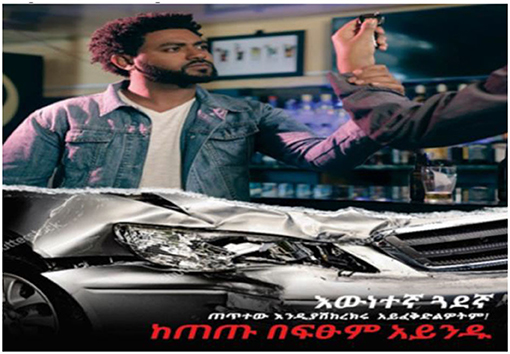
Figure 1. Image from PSA "Celebrate".

Figure 2. Image from PSA "Testimonial".
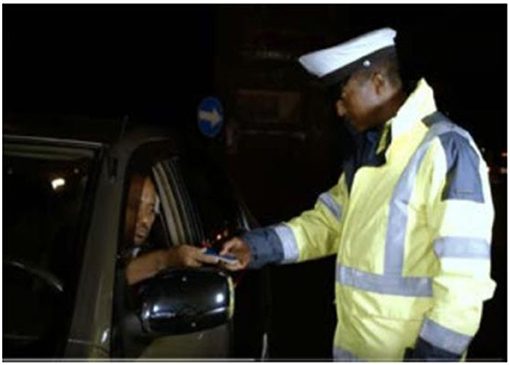
Effigy three. Image from PSA "Enforcement".
The campaign ran on multiple mass media outlets, including radio, tv set, billboards and posters, and on social media. The iii advertisements were staggered in phases within the campaign, with "Celebrate" and "Testimonial" on air from October xviii to December 9, 2016 and once more from April 6 to 21, 2017. "Enforcement" aired from March 29 to April 5, 2017 (Addis Ababa Urban center Administration, 2017b). A total of 150 television exposures and 508 radio spots were purchased, including airings after the national television news on all weekdays. The spots were likewise aired 180 times total in two major cinemas and 1,800 times on an outdoor screen at a picture palace circuitous. The campaign dates were synchronized with police enforcement activities around drink driving. Notably, this period marked the kickoff time Addis Ababa law had used breathalyzers for systematic enforcement of drinking and driving.
Sampling Method and Sample Size
A multistage stratified random sampling process was used to recruit participants for the surveys. The 2007 demography was used as a sampling frame. Census enumeration areas for urban and peri-urban areas formed the primary sampling units. There were a total of 3,779 enumeration areas in Addis Ababa (Census of Federal democratic republic of ethiopia, 2007), distributed across all 10 sub-cities; 17 enumeration areas were selected across the 10 sub-cities, with one to 3 in each sub-city based on the population size. Demography enumeration areas were selected at random, and then households were selected from within these areas, and and then participants selected from within these households. A Kish grid was used to select one participant from amongst multiple eligible participants in a household.
The report participants were current residents of Addis Ababa who were aged eighteen–55 years. The study selected participants who were current drivers of vehicles with four or more wheels (e.g., car, van, double-decker, or truck) and drove these vehicles ofttimes (iv or more than days a week). People were excluded from the study if, at the time of information drove, they worked in road prophylactic (including traffic departments, not-governmental organizations that work in route prophylactic, etc.); advertising; market enquiry; or the alcohol, tobacco, or car industries. A total of 1,442 drivers were interviewed (721 each in the pre- and post-campaign surveys). These cross-sectional samples are used for this study. For details on the sampling procedure and sample size, meet Appendixes B,C in the Supplementary Material.
Measures
The data gathered in the study were quantitative and collected using shut-ended questions. A few questions, such as those related to reactions to the campaign, attitudes, enforcement of drinking and driving laws, interpersonal communication, and support for the road safety campaign, were asked based on a v-point Likert scale. The following were key measures in the study (for details, come across Appendix D in Supplementary Material).
Campaign Sensation
Campaign sensation was assessed by showing participants images from each of the entrada PSAs (television, outdoors, and social media) and reading them a few sentences from the radio advertisement. Next, participants were asked what messages they recalled from the entrada. This was repeated for all three PSAs. All those who recognized any one of the campaign's three PSAs accurately (that is, they recognized any one of the entrada images or the radio script and they accurately recalled the entrada message) were categorized as "entrada aware." All other participants were categorized equally "campaign unaware."
Reactions to the Entrada
Reactions to the campaign were assessed by asking campaign-aware participants how strongly they agreed or disagreed with a series of statements about each PSA, for example, "the advertising fabricated me stop and think," "the ad made me feel more concerned about driving afterward drinking," and "the advertizing fabricated me effort to persuade others to non drink and bulldoze" (run across Table 3 for a consummate list of statements).
Interpersonal Communication
Interpersonal communication about the entrada was measured through a series of yes-no questions; for example, campaign-aware participants were asked whether they "said something about the PSA or discussed the PSA with others" or if they "tried to persuade others to not drink and drive." They were besides asked if someone had talked to them about drinking and driving in the previous ii months.
Knowledge
Cognition on drinkable driving road safety laws was measured by asking, "Is at that place a constabulary in your metropolis related to drinking and driving?".
Attitudes
Attitudes about drinking and driving were assessed by asking participants to what extent they agreed or disagreed with a series of statements on beverage driving, for case, "I am capable of determining when I have had too much to drinkable and drive," "People should be free to judge how much they can safely drink and drive," and "The people important to me retrieve that information technology is important to follow traffic rules" (come across Tabular array 4A for the consummate list of statements). Attitudes toward road safety laws and their enforcement were besides measured, e.g., "I am likely to exist caught and fined by the constabulary if I break a road rule," "Information technology is easy to reduce or avoid road penalties by bribing the traffic police force," and "Police enforcement of traffic laws only happens occasionally and on special occasions" (see Table 4B for the consummate listing of statements). Participants' take chances perceptions were measured by assessing how safe or unsafe they felt when drinking and driving.
Beliefs
Behavior about enforcement were measured past asking participants how likely information technology was that drivers would be stopped by constabulary for checks on drinking and driving and how likely it was that they would be caught by police for drinking and driving. Participants were likewise asked how often, if at all, they believed that drinkable driving laws were enforced and how strongly they agreed or disagreed that some people stopped at checkpoints are not jiff tested for drinking and driving (see Table 4B for the complete list of statements).
Behavior
Behavior effectually road safety and drinkable driving was assessed past asking participants how oft in the by two months they had driven a vehicle soon after drinking whatever amount of booze.
Data Assay
Data were weighted past gender and sub-metropolis level to accommodate for representation at the city level and so analyzed using SPSS 25.0. Two-sided tests of equality for cavalcade proportion were done to sympathise the differences in proportions between the pre- and post-campaign periods. Logistic regression was applied to measure the impact of the campaign on various indicators of knowledge, attitudes, and behavior. Campaign period (pre-campaign and post-campaign) was regressed on dichotomized measures of knowledge, attitudes, behavior, perception of enforcement of route safe laws, and back up for government action on road safe. Covariates included gender, historic period, marital condition, education, occupation, family income, religion, beingness the primary wage earner, having children <12 years of age, and number of days on which alcoholic drinks were consumed in the previous week.
Ethics Blessing
Before initiating the interview, the study was explained to all the participants. Exact consent was taken from each interviewee regarding their participation in the report. The questionnaire was administered only to those participants who agreed to participate. As an ESOMAR member, SART Consult complies with the professional and ethical standards of the ESOMAR International Lawmaking of Marketing and Social Research Practice.
Results
Sample Characteristics
Demographic characteristics of the participants in the pre- and post-campaign samples are presented in Table 1. In both rounds of report, a bulk of the participants were male and effectually 86% of the respondents were Christian; the remaining 14% were Muslim. In terms of educational attainment, half of the respondents had attended secondary or loftier school and one-4th had reached college level or above. Participants in the post-entrada survey were significantly younger, less likely to take children under the historic period of 12 residing with them, and more than likely to beverage alcohol four–6 days per calendar week or daily, compared with participants in the pre-campaign survey. They besides varied past occupation—pre-entrada participants were significantly more likely to be self-employed and skilled workers (such equally professional drivers, mechanics, carpenters, electricians, etc.), compared to post-campaign participants (23 vs. 15%; 58 vs. 52%, respectively). Family income results showed that 62 and 66% of the total respondents were in the monthly income range of ane,651–vii,800 Ethiopian Birr in the pre- and post-entrada surveys, respectively. The blazon of vehicle that respondents collection varied very slightly between the two surveys: in both pre- and post-entrada surveys, 59% collection four-wheeled personal vehicles, 36 and 38% collection four-wheeled commercial vehicles, and 3 and five% collection vehicles with six or more wheels in the pre- and post-campaign surveys, respectively. In terms of frequency of driving, a pregnant difference was observed whereby 33 and xl% of the participants in the pre- and post-campaign surveys, respectively, drove four–half dozen days per week, while 67 and sixty%, respectively, drove almost every day. There were no other significant differences between the pre- and post-entrada surveys.
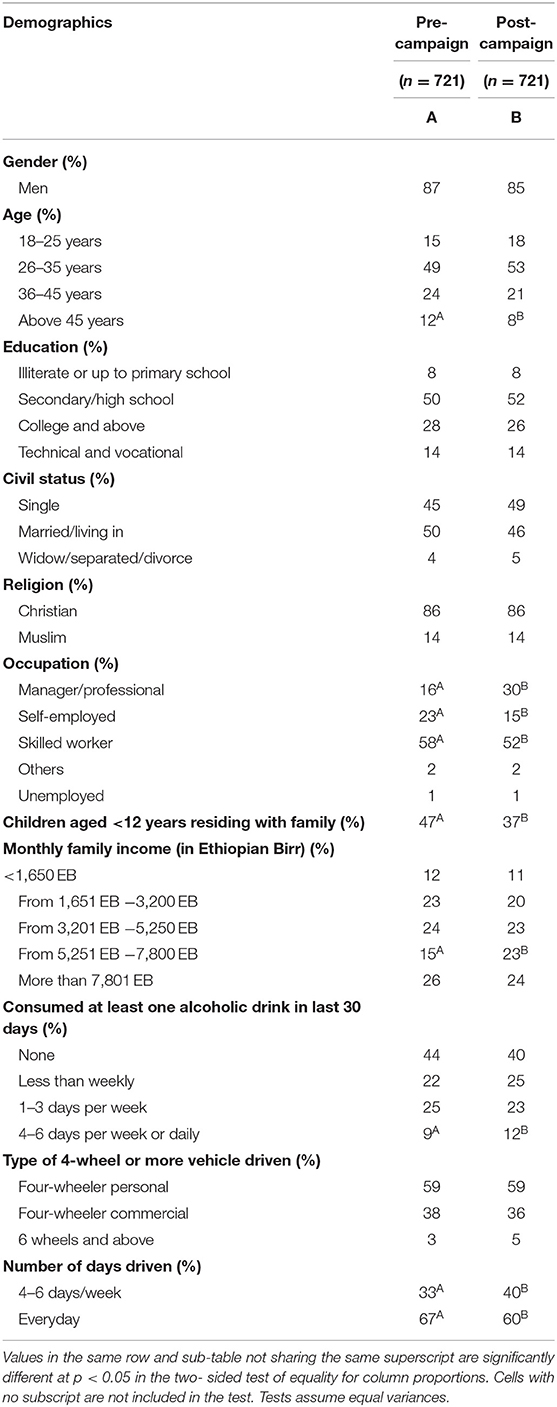
Tabular array ane. Demographic characteristics of participants in pre- and mail service-campaign samples.
Campaign Awareness
Overall, recall of the campaign was high (see Table 2). Among the post-campaign survey participants, 92% recalled the PSA "Testimonial," 83% recalled "Celebrate," and 76% recalled "Enforcement." A full of 97% of participants recalled any 1 of the iii PSAs and were designated as "entrada aware"; 66% recalled all the three PSAs (meet Table two). It was also observed that those who recalled all iii PSAs reported significantly college access to mass media platforms such as Tv, radio, and the internet compared to those who recalled only ane or 2 PSAs only. The drivers who recalled all three PSAs were significantly more likely to be members of younger age groups and the highest income groups, and to be booze consumers and drivers of personal iv-wheeled vehicles. The main letters recalled by participants were "never potable and bulldoze" (74%), "drinking and driving can kill y'all" (51%), and "drinking and driving is always risky" (50%).
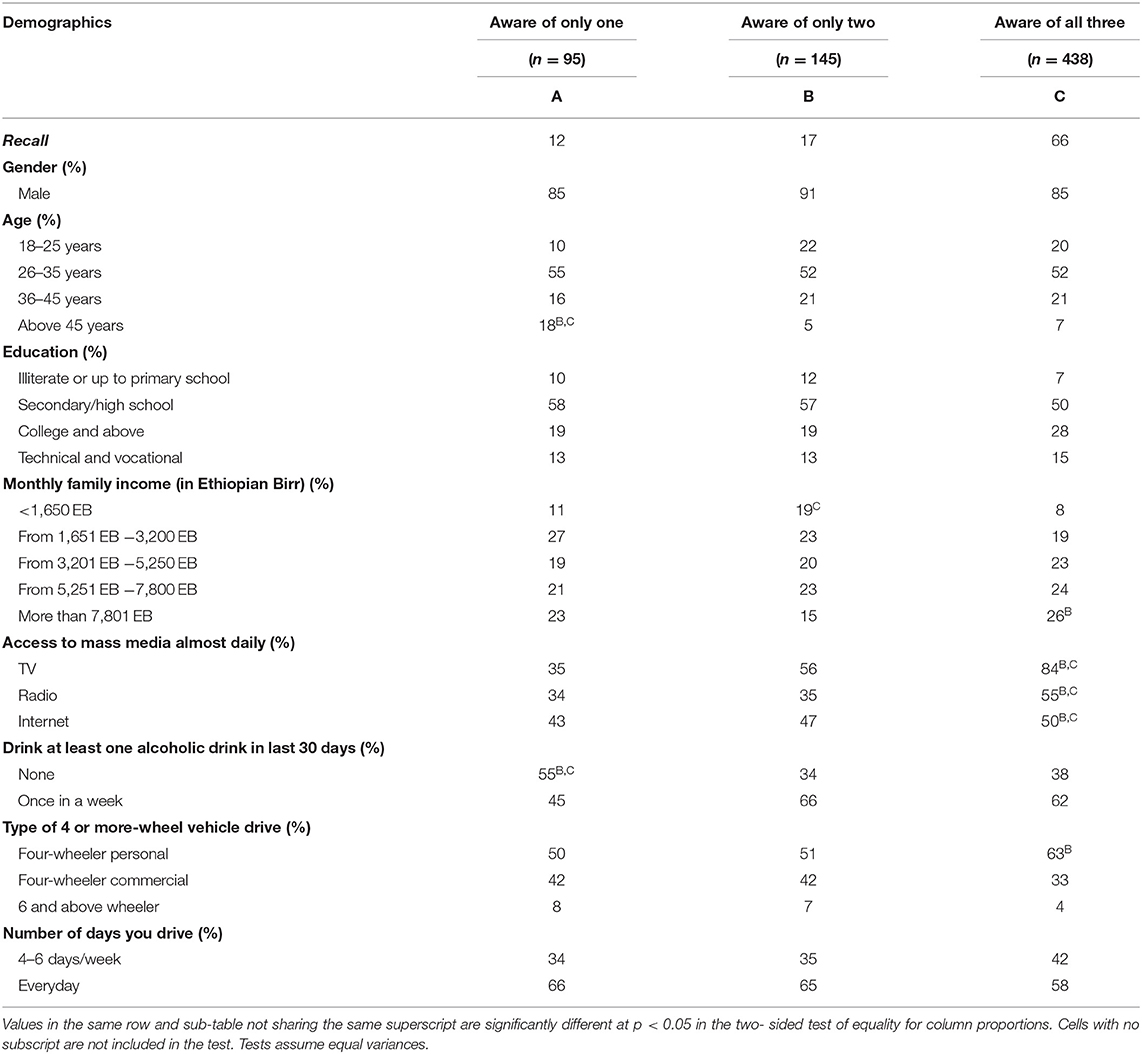
Table 2. Demographic characteristics of participants past number of PSAs recalled.
Reactions to the Campaign
Among post-campaign survey participants, those who were aware of the campaign rated it highly (see Table 3). The vast majority of participants who recalled the campaign agreed that the campaign PSAs were piece of cake to understand (96%), believable (90%), made them finish and think (86%), and taught them something new (84%). In improver, among those aware of the campaign, more than 84% reported that the PSAs made them feel concerned nearly driving later drinking booze, and more than 82% said the PSAs made them more than likely to try to not drive after drinking alcohol. More than 86% of those who recalled the campaign reported that they understood the consequences that drinkable driving tin can have on their ain or others' lives. Campaign sensation besides prompted interpersonal communication: 64% of campaign-enlightened participants discussed the PSAs with others, 52% tried to persuade others to not beverage and drive, and 65% tried to stop driving afterward drinking. More than 82% of those aware of the campaign also reported that all three PSAs were effective anti-potable-driving PSAs (Table iii).
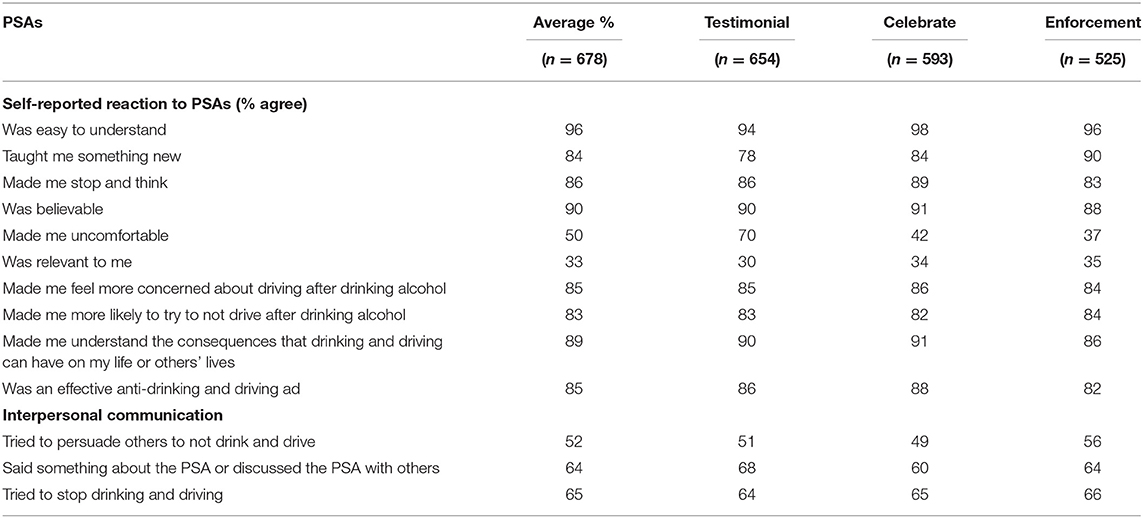
Tabular array 3. Appraisal of campaign letters and actions taken as a result of campaign sensation in post-campaign menstruum past PSA type.
Changes in Knowledge and Attitudes
There were significant differences in key measures of knowledge and attitudes nearly drink driving between pre- and mail-campaign participants (run across Table 4). Afterward the campaign, in that location was a meaning increase in the proportion of participants who agreed that information technology is difficult to know how much alcohol you tin beverage and still drive safely. A significantly greater proportion of mail-entrada survey participants reported feeling unsafe about driving later on drinking alcohol, compared with pre-campaign survey participants (68 vs. 59%). Likewise, afterward the entrada, participants showed significant improvement in several measures of knowledge effectually drinking and driving, compared with pre-campaign survey participants. Amidst post-campaign participants, 29% agreed that they were capable of determining when they have had too much to drink and drive, compared with 39% of pre-entrada participants. In add-on, after the campaign, there was a pregnant reduction in the proportion of participants who agreed that people should be complimentary to judge how much they tin can safely drink and drive (49 vs. 37%); and, a significant reduction in the proportion who agreed that having one or two alcoholic drinks does not make them more likely to crash (26 vs. 23%). Similar findings were observed in the studies done by Angle et al. (2009) and van Bueren et al. (2016).
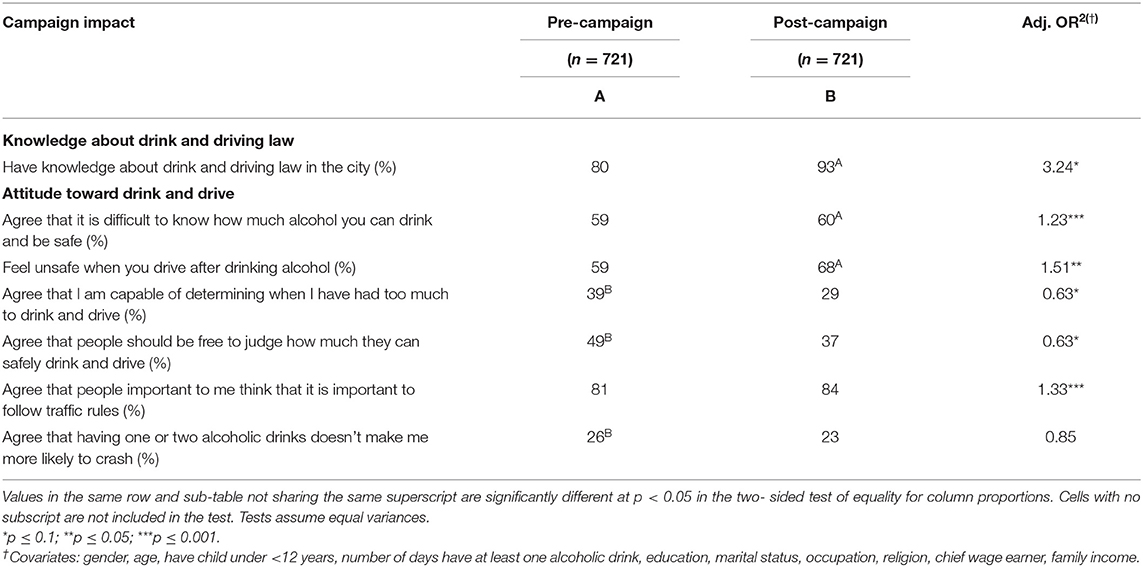
Table 4A. Campaign impact on knowledge and attitudes and support for regime action, by pre-campaign and mail service-campaign menses.
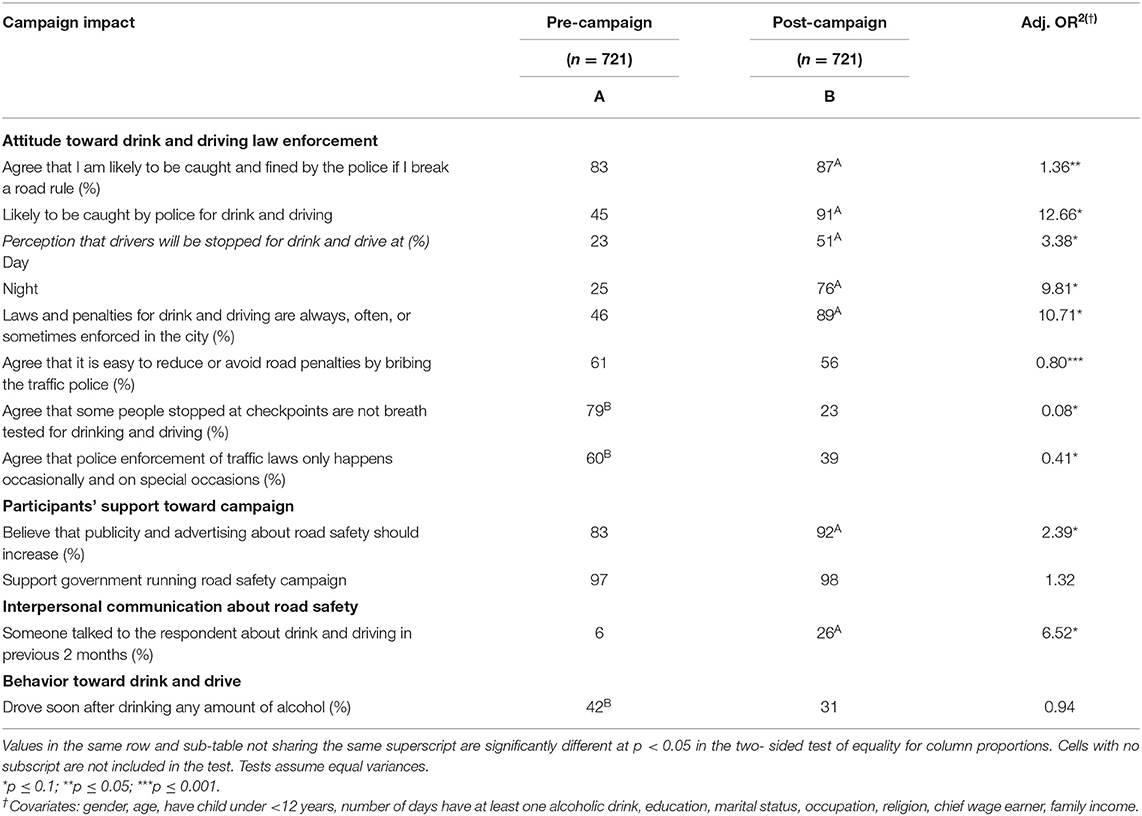
Table 4B. Campaign impact on hazard perception, interpersonal communication, support for government action, and behavior, past pre-campaign and post-campaign flow.
After the campaign, social norms related to road safety also showed a positive shift. Mail-campaign survey participants were more than likely to agree that people important to them call up that information technology is important to follow traffic rules, compared with pre-campaign survey participants. There was besides an increment in interpersonal advice. More than than 4 times as many postal service-campaign survey participants said someone has spoken to them about drinking and driving in the previous two months, compared with pre-campaign survey participants (26 vs. 6%). Finally, following the campaign, there was a statistically significant increase in the proportion of participants who said that publicity and advert about road safety should increase (83 vs. 92%).
Post-entrada survey participants demonstrated significantly greater levels of knowledge well-nigh road rubber laws, compared with pre-campaign survey participants. After the campaign, 93% of participants mail-campaign reported that they have cognition about the drinking and driving laws in the urban center, compared with 80% of pre-campaign participants. There was also a significant increment following the entrada in agreement with behavior that laws would exist enforced. Mail service-campaign survey participants who recalled the campaign were significantly more likely to agree that a person is likely to be caught and fined past the constabulary if they break a road rule (OR = 1.36, p < 0.05); that drivers would be stopped for beverage driving, particularly at night (OR = 9.81, p < 0.i); and that the enforcement of laws and penalties for drink and driving in the city would occur (OR = ten.71, p < 0.1). Similarly, after the entrada, fewer participants agreed that it is easy to reduce or avoid road penalties by bribing the traffic law (OR = 0.80, p < 0.01); that some people stopped at checkpoints are not breath tested for drinking and driving (OR = 0.08, p < 0.1); and that constabulary enforcement of traffic laws merely happens occasionally and on special occasions (OR = 0.41, p < 0.1), compared with pre-campaign participants.
Post-obit the campaign, cocky-reported hazard beliefs showed improvement as well. Post-campaign participants reported lower rates of driving soon after drinking any corporeality of alcohol, compared with pre-campaign participants, although differences were not pregnant (31 vs. 42%). Linkenbach and Perkins (2005) and van Bueren et al. (2016) had like findings in their studies.
Word
This study is one of the first that aims to capture cognition, attitudes, and practices around drinking and driving and its enforcement in Addis Ababa. The results testify that the campaign performed as intended and had a positive impact on social norms and on drivers' noesis and attitudes toward drinking and driving in Addis Ababa. In addition, this written report has dandy significance as a campaign evaluation, demonstrating the value of the intervention in Addis Ababa.
Recall of the campaign was impressively loftier, with 97% of study participants recalling whatsoever of the three PSAs and 66% recalling all three. Think of all iii PSAs was higher amidst participants who were younger, had higher incomes, and who reported drinking booze. Our findings of loftier rates of recollect suggest that the media outlets—television, radio, and outdoor—were constructive at reaching the target audience. Despite a constantly expanding social media user base in Addis Ababa, the PSA had the highest recall for those participants who viewed it via boob tube. This is consequent with previous findings of television being the most common source of information, and thus highest recall is reported through television (Angle et al., 2009; van Bueren et al., 2016).
This study showed positive changes in attitudes toward drink driving, and these were consistent with the entrada's intent. Postal service-campaign participants were over one and a one-half times more likely to report feeling unsafe near drinking and driving (OR = 1.51, p < 0.05) and nearly ane-quarter times more than likely to concur information technology is difficult to know how much alcohol you tin can beverage and bulldoze safely, compared with pre-campaign survey participants. These results indicate that the mass media entrada increased drivers' perceptions of the risks of drinking and driving. This entrada, every bit other constructive campaigns, was successful in increasing risk perceptions, which encourages a shift in attitudes toward potable driving (Tay, 2002).
Social norms have a powerful influence on how people approach risky road behaviors. The results of this study in Addis Ababa propose a positive modify in social norms related to drinking and driving. After the campaign, participants were one and a third times more probable to study people important to them call back it is of import to follow traffic rules, compared with pre-entrada participants (OR = ane.33, p < 0.001). Increased interpersonal communication well-nigh risky behaviors is an important proxy for changes in social norms, and it is essential that a PSA generates interpersonal communication that is effective and causes behavioral alter (Southwell and Yzer, 2007). We found that interpersonal advice about drinking and driving significantly increased after the campaign. Following the campaign, the proportion of survey participants who said someone had spoken to them about drinking and driving had more quadrupled, compared with pre-campaign survey participants. Amid campaign-enlightened participants, interpersonal advice was fifty-fifty higher, with participants having discussed drinking and driving with others and having tried to persuade others to not drink and drive.
Later on the campaign, participants showed significantly greater levels of support for and confidence in enforcement activities, as well equally an increased perception of the risk of getting caught for drinking and driving. Findings from this written report build on previous literature examining the impact of anti-drink-driving mass media campaigns on enforcement. Along with communicating nearly wellness harms and changing people's risk perceptions, campaigns and PSAs that showcase enforcement strategies as a means of message delivery have also been found to be constructive in reducing crashes (Phillips et al., 2011; Alonso et al., 2015). This tin also help increment support for enforcement and additional penalties for driving nether the influence of alcohol (Agent et al., 2002). Linkenbach and Perkins (2005) found a campaign as well affected attitudes toward impaired driving enforcement policy and generated back up for policies to reduce dumb driving. Finally, this study, as accept before studies, establish that later the campaign the majority of mail service-campaign survey participants felt that they would be likely to be caught by the police if they were to drive after drinking (Bending et al., 2009).
In line with international best practice, this campaign was timed to coincide with widespread enforcement of beverage driving laws past constabulary in Addis Ababa. Prior to this initiative, constabulary in Addis Ababa had not used breathalyzers or conducted routine drinking and driving screenings. Therefore, the visible police enforcement on the roads while the campaign was on the air is likely to have contributed to the changes in attitudes toward enforcement and toward the acceptability of drinking and driving. This is in line with previous studies (Stanojević et al., 2013; Esser et al., 2016) that constitute that strict enforcement made people fear beingness defenseless, resulting in desirable beliefs change. Other studies ended that a multi-pronged approach, such as the one used in Addis Ababa, was constructive in irresolute behavior because it combined legal penalties for violations with communication campaigns (Anderson et al., 2009; World Health Organization, 2010; Cheng et al., 2011; Hoekstra and Wegman, 2011).
Participants in the post-campaign survey as compared to the pre-campaign were nearly two and a one-half times more than likely to report increased back up for publicity and advertising about road safety, suggesting that future campaigns on route safety risk factors may be equally well-received.
Finally, and possibly about chiefly, this study found that after the campaign there was improvement in self-reported chance beliefs, which previous studies have as well found (Tay, 2002). In the mail service-campaign survey, significantly fewer drivers reported that they drove shortly later on drinking any amount of alcohol (31% mail service-campaign vs. 42% pre-campaign). Given the measured change in attitudes and norms, and if both communication and enforcement efforts continue, it is reasonable to be optimistic that dangerous drinking and driving behavior volition keep to subtract in Addis Ababa.
Written report Limitations
There are several limitations to the study. Showtime, the written report did not measure frequency of exposure to the campaign. To ensure that a media campaign has a stiff impact, a sufficient level of media exposure is needed (Linkenbach and Perkins, 2005). Estimating the relationship between the frequency of exposure to the campaign and behavior change can inform the minimum level of exposure required for impact, which can be useful for developing cost-effective campaigns, especially in low-income countries with limited resource, and thus future studies tin do and then. Second, the report relied on many self-reported measures, including drinking, and driving practices; the reliability and validity of these measures is unknown. An cess of blood alcohol concentration (BAC) in a randomly selected sample could potentially have yielded more than reliable and valid results. That said, we used preexisting measures known to be reliable where possible. Airplane pilot testing was washed to ensure that the questions worked equally intended. The questionnaire design, including consideration of club effects, sought to address any potential biases from cocky-reports. Third, there exist limitations in the written report's pattern by which participants were non randomly assigned to campaign exposure; randomly assigning participants to campaign exposure and no exposure would allow for establishing causal effects of the campaign on noesis, attitudes, and behavior, simply this is mostly impractical for a mass media campaign in a defined geographical surface area such as a city. Fourth, a limitation is that the results cannot be generalized to the whole of Ethiopia, since they are applied to a very specific area; still, this makes them especially useful for time to come interventions and communication campaigns in Addis Ababa. Finally, the study does not examine the campaign's impact on the prevalence of drinkable driving-related route traffic crashes or its long-term effects in Addis Ababa. To address this limitation, in future studies, it could be useful to compare self-reported results with data on road traffic crashes. In add-on, follow-upwardly surveys would be useful to measure whether the campaign's effects are maintained over fourth dimension. Since governments are advised to bear a series of campaigns, based on evidence that single campaigns have a limited long-term effect, a survey earlier the next entrada would provide information on long-term impacts, likewise every bit serving as a baseline to measure the touch on of later campaigns.
Conclusion
Previous studies in high-income countries have institute that mass media campaigns can play an of import role in irresolute drinkable driving behaviors (Dejong and Charles, 1995; Linkenbach and Perkins, 2005; Geleta et al., 2020). Findings from this study reveal anti-potable-driving campaigns tin can be an effective public health tool to increase knowledge, change attitudes, and reduce risky road behaviors around drinking and driving in Addis Ababa. The objective of the campaign in Addis Ababa was to make drivers enlightened of the dire consequences of drinking and driving, and in turn change their related knowledge, attitudes, and behaviors. The campaign achieved gains in knowledge and improved attitudes toward potable driving, and, importantly, reduced drinking, and driving behavior, which could assist to adjourn road traffic crashes and related deaths and injuries in Addis Ababa. Findings of this written report are useful for local government and public wellness officials in understanding the efficacy of the entrada and messages for futurity mass media campaigns in Addis Ababa.
This study offers some of the commencement evidence that a campaign targeting drinking and driving, paired with enhanced enforcement of drinking and driving laws, can be effective, not simply in high-income countries, but in low- and middle-income countries as well. Almaz et al. (2014), Mekonen (2016), Bekele and Sima (2019), Kebede et al. (2019), and Geleta et al. (2020) suggested that multiple intervention programs that include public sensation, enforcement of beverage driving laws, and other route rubber laws take proven effective in decision-making alcohol-dumb driving and alcohol-related crashes. Mass media campaigns on risky road behavior such every bit drink driving should be sustainably funded and scientifically adult to promote lasting behavior alter.
Data Availability Statement
The raw data supporting the conclusions of this article will be fabricated available by the authors, to other researchers on asking, post-obit publication. The researchers will sign a contract with Vital Strategies on data utilise.
Ethics Statement
Upstanding review and blessing was not required for the study on man participants in accordance with the local legislation and institutional requirements. Written informed consent for participation was not required for this study in accordance with the national legislation and the institutional requirements.
Author Contributions
NSN: formulation, study pattern and direction of information analysis, information interpretation, literature review, and writing. KS: help in writing and overall technical assistance for the entrada and evaluation. IM and SM: review and overall guidance of this evaluation. TA: conduct of the analysis. SK: strategic planning of mass media and implication of evaluation findings. AN: coordination with stakeholders. NK: review of analysis and help in writing. NM: formulation, study design and direction of data analysis, data interpretation, and assistance in writing the paper. All authors: contributed to manuscript revision and read and canonical the submitted version.
Funding
As a part of the v-year Bloomberg Philanthropies Initiative for Global Route Safety, Vital Strategies was supported past a grant from Bloomberg Philanthropes for the touch on evaluation and assay. However, Bloomberg Philanthropies was non involved in whatsoever aspect of the evaluation written report or the writing of this manuscript. The authors have not received any additional remuneration to write this article.
Conflict of Interest
The authors declare that the inquiry was conducted in the absenteeism of any commercial or financial relationships that could be construed as a potential conflict of involvement.
Acknowledgments
The authors gratefully acknowledge Bloomberg Philanthropies for their generous support of this project, also equally the Addis Ababa staff and international partners of the Bloomberg Philanthropies Initiative for Global Road Safety, Vital Strategies advice consultant, Tsion Kiros, and the Addis Ababa Traffic Management Bureau, which funded the airtime for the campaign. The authors would besides similar to acknowledge Julia Berenson for editorial back up and Meena Maharjan for her support in writing the paper.
Supplementary Material
The Supplementary Material for this article can be found online at: https://www.frontiersin.org/articles/ten.3389/frsc.2020.563350/full#supplementary-fabric
References
Addis Ababa City Administration (2017a). Addis Ababa Route Safety Strategy (2017–2030).
Addis Ababa City Assistants (2017b). Annual Road Safety Written report, Addis Ababa 2016–2017.
Almaz, B., Cherie, A., and Bayray, A. (2014). Cess of route traffic accidents among children in addis ababa metropolis, Ethiopia; a retrospective record. J. Med. Sci. Technol. iii, 25–36.
Google Scholar
Alonso, F., Pastor, J. C., Montoro, Fifty., and Esteban, C. (2015). Driving under the influence of alcohol: frequency, reasons, perceived risk and punishment. Subst. Corruption Treat. Prev. Policy x:eleven. doi: x.1186/s13011-015-0007-4
PubMed Abstract | CrossRef Total Text | Google Scholar
Anderson, P., Chisholm, D., and Fuhr, D. C. (2009). Effectiveness and price-effectiveness of policies and programmes to reduce the harm caused by booze. Lancet 373, 2234–2246. doi: 10.1016/S0140-6736(09)60744-three
PubMed Abstract | CrossRef Full Text | Google Scholar
Angle, H., Kirwan, South., Buckley, K., and Goddard, E. (2009). Think! Road Safe Campaign Evaluation. Post evaluation of the 'Personal Consequences' beverage bulldoze campaign report. British Market place Research Bureau (BMRB) Social Research.
Anteneh, A., and Endris, B. S. (2020). Injury related adult deaths in Addis Ababa, Ethiopia: analysis of data from verbal autopsy. BMC Public Health 20:926. doi: x.1186/s12889-020-08944-7
PubMed Abstract | CrossRef Full Text | Google Scholar
Bachani, A. M., Risko, C. B., Gnim, C., Coelho, S., and Hyder, A. A. (2017). Knowledge, attitudes, and practices effectually drinking and driving in Cambodia: 2010–2012. Public Health 144, S32–S38. doi: 10.1016/j.puhe.2016.12.012
PubMed Abstract | CrossRef Full Text | Google Scholar
Bekele, T. G., and Sima, T. H. (2019). Road Traffic Accident Crusade and Consequence on Socio Economic system of Addis Ababa City. Faculty/Section: Research and programme, Addis Ababa, Federal democratic republic of ethiopia.
Google Scholar
Carvajal, F., and Lerma-Cabrera, J. Thousand. (2015). "Alcohol consumption among adolescents—implications for public wellness," ins Top Public Wellness, ed D. Claborn (Intech), 51–76. doi: x.5772/58930
CrossRef Full Text | Google Scholar
Census of Ethiopia (2007). Population and Housing Demography of Ethiopia, Administrative Report. Central Statistical Authority Addis Ababa.
Cheng, H., Lee, N., and Kotler, P. (2011). Social Marketing for Public Wellness: Global Trends and Success Stories. Sudbury, MA: Jones & Bartlett Learning.
Google Scholar
Decker, M. D., Graitcer, P. L., and Schaffner, W. (1988). Reduction in motor vehicle fatalities associated with an increase in the minimum drinking age. JAMA 260, 3604–3610. doi: 10.1001/jama.1988.03410240074035
PubMed Abstract | CrossRef Total Text | Google Scholar
Dejong, W., and Charles, K. A. (1995). A review of national television PSA campaigns for preventing booze-impaired driving, 1987–1992. J. Public. Health. Policy 16:59–80.
PubMed Abstruse | Google Scholar
Elderberry, R. Westward., Shults, R. A., Sleet, D. A., Nichols, J. L., Thompson, R. S., Rajab, Westward., et al. (2004). Effectiveness of mass media campaigns for reducing drinking and driving and alcohol-involved crashes: a systematic review. Am. J. Prev. Med. 27, 57–65. doi: ten.1016/j.amepre.2004.03.002
PubMed Abstract | CrossRef Full Text | Google Scholar
Elliott, B. (1993). Route Safe Mass Media Campaigns: A Meta Analysis. Vol. CR 118. Canberra, ACT: Federal Function of Route Prophylactic.
Google Scholar
Elvik, R., Vaa, T., Hoye, A., and Sorensen, M. (2004). "Factors contributing to road accidents," in The Handbook of Route Safety Measures, eds R. Elvik, A. Hoye, T. Vaa, and Grand. Sorensen (Oxford: Emerald Grouping Publishing Limited), 29–79.
Esser, M. B., Wadhwaniya, Southward., Gupta, S., Tetali, S., Gururaj, G., Stevens, G. A., and Hyder, A. A. (2016). Characteristics associated with alcohol consumption among emergency department patients presenting with road traffic injuries in Hyderabad, Republic of india. Injury 47, 160–165. doi: 10.1016/j.injury.2015.07.022
PubMed Abstract | CrossRef Full Text | Google Scholar
Geleta, D. K., Adem, H. A., Kumsa, F. A., Demena, Thousand., and Gobena, T. (2020). Route traffic accidents fatality and associated factors in Southwest Shoa, primal Ethiopia. East Afr. J. Health Biomed. Sci. 4, 35–46. Available online at: http://ejol.aau.edu.et/index.php/EAJHBS/article/view/1810/1260
Google Scholar
Hoekstra, T., and Wegman, F. (2011). Improving the effectiveness of road safety campaigns: current and new practices. IATSS Res. 34, 80–86. doi: 10.1016/j.iatssr.2011.01.003
CrossRef Full Text | Google Scholar
John's Hopkins Academy, 2019. "Monitoring and Evaluation Baseline report, Addis Ababa," in Bloomberg Initiative for Global Road safe (BIGRS) 2015-2019. Unpublished study.
Kebede, A., Beyene, T., and Geremew, H. (2019). Road Traffic Blow Related Fatalities in Addis Ababa City, Addis Ababa, Federal democratic republic of ethiopia: An Analysis of Police Report 2013/fourteen. ECRONICON.
Kenkel, D. South. (1993). Drinking, driving, and deterrence: the effectiveness and social costs of culling policies. J. Law Econ. 36, 877–913. doi: 10.1086/467301
CrossRef Full Text | Google Scholar
Lastovicka, J. L., Murry, J. P. Jr., and Joachimsthaler, E. A. (1990). Evaluating the measurement validity of lifestyle typologies with qualitative measures and multiplicative factoring. J. Market. Res. 27, xi–23. doi: ten.1177/002224379002700102
CrossRef Total Text | Google Scholar
Martí-Belda, B., Pastor, J. C., Montoro, L., Bos,ó, P., and Roca, J. (2019). Persistent traffic offenders. Alcohol consumption and personality equally predictors of driving disqualification. Eur. J. Psychol. Appl. Legal Context eleven, 81–92. doi: 10.5093/ejpalc2019a3
CrossRef Full Text | Google Scholar
Mekonen, Due east. K. (2016). The economic effect of road traffic accidents in Federal democratic republic of ethiopia: evidences from Addis Ababa city. ITIHAS J. Indian Manag. 6, eleven–21.
Google Scholar
Mruk (2007). Road Safety Drink-Drive 2006 Campaign Evaluation. Available online at: world wide web.scotland.gov.uk/socialresearch (accessed March 28, 2019).
Murry, J. P., Stam, A., and Lastovicka, J. L. (1993). Evaluating an anti-drinking and driving advertizing entrada with a sample survey and time series intervention analysis. J. Am. Stat. Assoc. 88, 50–56. doi: 10.1080/01621459.1993.10594288
CrossRef Total Text | Google Scholar
Phillips, R. O., Ulleberg, P., and Vaa, T. (2011). Meta-analysis of the effect of road safety campaigns on accidents. Accid. Anal. Prev. 43, 1204–1218. doi: 10.1016/j.aap.2011.01.002
PubMed Abstract | CrossRef Full Text | Google Scholar
Redman, South., Spencer, E. A., and Sanson-Fisher, R. W. (1990). The role of mass media in irresolute health-related behaviour: a critical appraisal of 2 models. Wellness Promot. Int. 5, 85–101. doi: 10.1093/heapro/5.1.85
CrossRef Full Text | Google Scholar
Southwell, B. G., and Yzer, Thousand. C. (2007). The roles of interpersonal communication in mass media campaigns. Ann. Int. Commun. Assoc. 31, 420–462. doi: ten.1080/23808985.2007.11679072
CrossRef Full Text | Google Scholar
Stanojević, P., Jovanović, D., and Lajunen, T. (2013). Influence of traffic enforcement on the attitudes and behavior of drivers. Accid. Anal. Prev. 52, 29–38. doi: 10.1016/j.aap.2012.12.019
PubMed Abstruse | CrossRef Full Text | Google Scholar
Stewart, K., Silcock, D., and Wegman, F. (2012). Reducing drink driving in low- and heart-income countries: challenges and opportunities. Traffic Inj. Prev. 13, 93–95. doi: x.1080/15389588.2011.634464
PubMed Abstract | CrossRef Total Text | Google Scholar
Tay, R. (2002). Exploring the effects of a road condom advertising campaign on the perceptions and intentions of the target and nontarget audiences to drink and drive. Traffic Inj. Prev. 3, 195–200. doi: 10.1080/15389580213651
CrossRef Full Text | Google Scholar
Ulleberg, P., Vaa, T., Ausserer, K., Carstensen, Thou., Frontward, S., Krol, B., et al. (2009). Road User Model and Persuasion Technique: Final Version. Uden navn, No. D 1.iv Available online at: http://www.bandage-eu.org/docs/CAST_WP1_Deliverable%201.4.pdf (accessed March 28, 2019).
Google Scholar
Useche, Southward., Serge, A., Alonso, F., and Esteban, C. (2017). Alcohol consumption, smoking, task stress and route safety in professional drivers. J. Addict. Res. Ther. viii:1000321. doi: 10.4172/2155-6105.1000321
CrossRef Total Text | Google Scholar
Yadav, A. M., Rai, B. M., Niraula, S. R., Yadav, A., Bhandari, R., and Shrivastav, 5. (2019). Identification of alcohol problem amid long route charabanc drivers and staffs of Dharan, eastern Nepal: assessing from the CAGE and DSM-Iv tools. J. Fam. Med. Prim. Care 8, 853–59. doi: x.4103/jfmpc.jfmpc_301_17
PubMed Abstruse | CrossRef Total Text | Google Scholar
Young, B., Lewis, S., Katikireddi, South. 5., Bauld, L., Stead, M., Angus, K., et al. (2018). Effectiveness of mass media campaigns to reduce alcohol consumption and harm: a systematic review. Alcohol Alcoholism 53, 302–316. doi: 10.1093/alcalc/agx094
PubMed Abstruse | CrossRef Full Text | Google Scholar
Zhao, 10., Zhang, X., and Rong, J. (2014). Study of the effects of alcohol on drivers and driving performance on straight road. Math. Probl. Eng. 2014:607652. doi: x.1155/2014/607652
CrossRef Total Text | Google Scholar

Anti Drinking And Driving Posters,
Source: https://www.frontiersin.org/articles/10.3389/frsc.2020.563350/full
Posted by: martinhurping.blogspot.com
0 Response to "Anti Drinking And Driving Posters"
Post a Comment